
Style & Culture
The Meme Frame
The glasses emoji, the pixel shades, and eyewear's second life as internet language.
Issue #1 · Published Oct 19, 2026
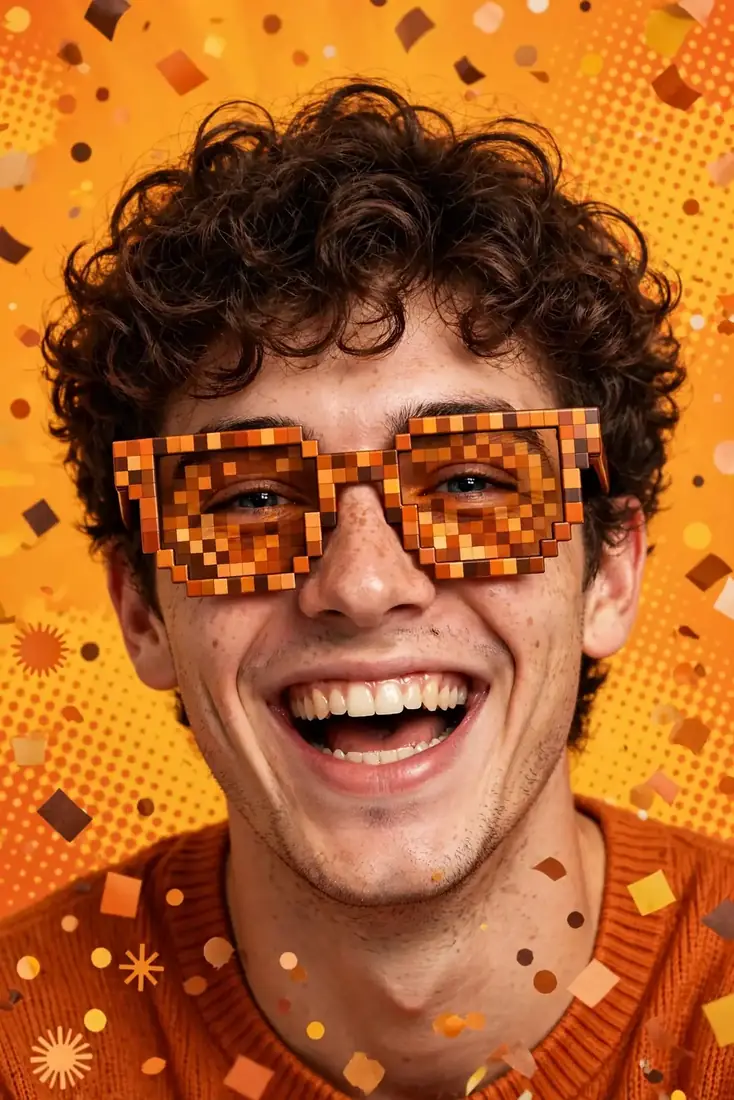
Glasses have escaped the face and become vocabulary. The sunglasses emoji doesn't mean "eyewear" — it means unbothered, victorious, cool under pressure. The pixel-shaded "deal with it" glasses don't mean "vision correction" — they mean the argument is over and you won. Somewhere along the way, frames became one of the internet's most fluent visual shortcuts, understood instantly in every language that has a keyboard.
It makes sense. Glasses already sit on the face, the most expressive real estate humans have. Reducing a whole attitude to a pair of shades is just efficient communication. The nerd-glasses filter says earnest. The heart-eyes filter says smitten. The tiny sunglasses on a dog say everything is fine, actually. Each one is a frame doing the same job frames have always done — telling you who someone is before they speak — compressed into twelve pixels.
The meme frame also democratizes eyewear culture in a way the industry never managed. You don't need a prescription, a fitting, or a budget to participate. The kid who can't afford designer acetate can still speak fluent sunglasses emoji. And the pipeline runs both directions: meme aesthetics leak back into real frames — the ironic tiny sunglasses, the chunky "protagonist" acetate, the deliberate throwback shapes worn as a joke that becomes a look. Smart brands have stopped fighting this and started feeding it, designing frames they know will photograph as memes first and eyewear second.
Eyewear was always a language. The internet just gave it a bigger alphabet — and everybody's fluent.
The sunglasses emoji doesn't mean eyewear. It means you won.