
Issue #1 — The Debut · Smart Buys
Smart Buys: the whole section
What your money buys at every price tier and where the markup hides — every Smart Buys story from the debut issue, in order. Prefer it page by page? Start at page 66, or browse the Smart Buys hub.
66 $40 vs $400 Single page →
 Smart Buys
$40 vs $400
The question every glasses buyer asks, answered honestly.
Issue #1 · Published Oct 19, 2026
What am I actually paying for? A $40 pair and a $400 pair both hold lenses in front of your eyes. Both can look good. The difference isn't one thing — it's a dozen small things, and whether any of them matter depends entirely on you.
Let's be blunt. The frame that holds your lenses is, materially, a few dollars of plastic or metal. What you're paying for beyond that is design, craft, brand, distribution, service, and — yes — markup. At the budget tier, you're getting function: it holds lenses, it looks fine, it'll last a reasonable while. At the luxury tier, you're getting materials engineered to a standard, hand-finishing, design provenance, and a shopping experience with real humans who adjust things for free.
The honest answer to "$40 vs $400" is that neither is a scam and neither is a miracle. Budget frames democratized eyewear — that's real progress. Luxury frames deliver genuine craft and service — that's real too. The ripoff zone is the middle, where you can pay luxury-adjacent money for budget-tier product if you don't know what to look for.
So this section is your map. What budget buys. What luxury buys. Where the smart money actually goes — the mid-range tier that the direct-to-consumer compression quietly made the best deal in eyewear. By page 80, you'll know exactly where every dollar lands — which is why this club exists: own your vision, and your wallet.
THE $40 BUILD
$40
- Frame: standard acetate or basic metal — on-trend shapes, mass-made
- Hinges: standard barrels. They hold; they don't glide
- Fitting: virtual try-on, adjustments are on you
- Service: mass-market QC — mostly good, occasionally crooked
- You're paying for: function. A tool, not a treasure
THE $400 BUILD
$400
- Frame: Japanese titanium or thick-sheet acetate, hand-polished in stages
- Hinges: engineered like watch parts — five- and seven-barrel builds
- Fitting: expert fitting, acetate warmed and shaped to your skull
- Service: free adjustments for life, generous warranties
- You're paying for: craft, service, design — and yes, the brand
Bar segments are the Club's schematic of where the money goes — not an audit. Neither tier is a scam; the ripoff zone is the uninformed middle.
67 What $40 Buys Single page →
Smart Buys
What $40 Buys
An honest anatomy of the budget tier.
Issue #1 · Published Oct 19, 2026
A budget-tier frame — the kind you'll find from value direct-to-consumer brands — is, first and foremost, functional: it holds your lenses at the right distance from your eyes. Strip the snobbery out of the tier and that's the honest starting point. The designs track the trends: you'll find the oversized rounded rectangles, the slim ovals, the wire rounds, all of it. If style is the priority, budget wins on breadth.
Materially, you're looking at standard acetate or basic metal alloys — fine, but not the stuff of legend. Hinges are where the compromise lives: standard barrel hinges rather than the five- or seven-layer sprung constructions the craft houses brag about. They'll hold. They won't glide. Screws may loosen over time; a small screwdriver (or a free adjustment at any optical shop) solves most of it.
What you don't get: the service layer. Try-on is virtual. Adjustments are on you. If the fit is off, there's no optician warming the acetate and shaping it to your skull — unless you pay one. And quality control is mass-market: mostly good, occasionally a pair that's slightly crooked out of the box.
Here's the honest verdict. Budget frames are the best thing that ever happened to people who just need to see. The value-DTC wave — Zenni and its peers — has put structural pressure on optical retail margins, and that pressure is one reason mid-range prices keep dropping. If you treat a budget pair as a tool, not a treasure, you'll never be disappointed. That's not a compromise. That's a strategy.
68 What $400 Buys Single page →
Smart Buys
What $400 Buys
Where luxury-tier money actually goes.
Issue #1 · Published Oct 19, 2026
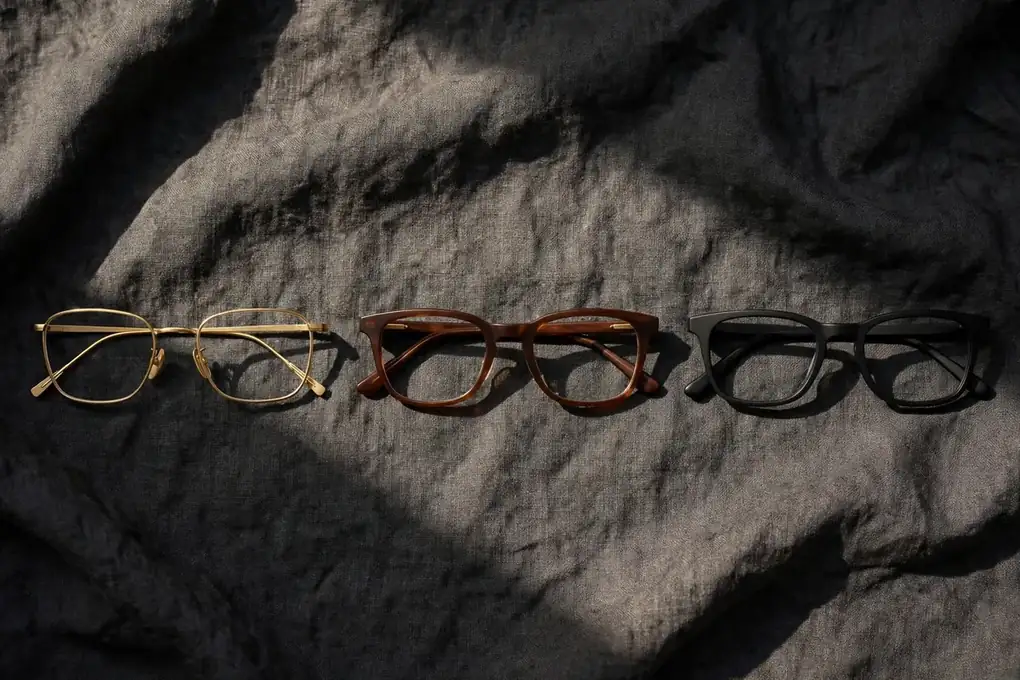
Nobody needs to spend luxury-tier money. But it's worth knowing what it buys, because some of it is real. At the top tier, materials change character: Japanese titanium that weighs almost nothing, acetate cut from thick sheets and hand-polished through multiple stages, hinges engineered like watch parts. Some craft houses run a single frame through hundreds of steps and dozens of hands. That's not marketing. It's labor.
Then there's design provenance — the part snobs pay for and cynics dismiss, and both are a little right. A frame designed by a real designer, in a real studio, with a real point of view, carries something a trend-knockoff doesn't. Whether that's worth a multiple of the price is a personal call. What isn't debatable is the service: luxury purchases come with expert fitting, free adjustments for life, generous warranties, and staff who know the difference between a bridge width and a temple length.
If you can't name what you're paying for beyond the logo, put the card down.
What you also buy, unavoidably, is brand. The logo, the case, the bag, the feeling. Marketing budgets are baked into every luxury frame. The honest luxury buyer admits this and enjoys it anyway. The dishonest one pretends the logo is free.
Our verdict: luxury-tier money is best spent when you can articulate what you're paying for — the craft, the fit, the service, the design — and it's genuinely worth it to you. If you can't name the reason beyond the name on the temple, put the card down and walk around the block. Own the reason, or keep the money.
69 The Sweet Spot Single page →
Smart Buys
The Sweet Spot
Why the mid-range is the smartest money in eyewear.
Issue #1 · Published Oct 19, 2026
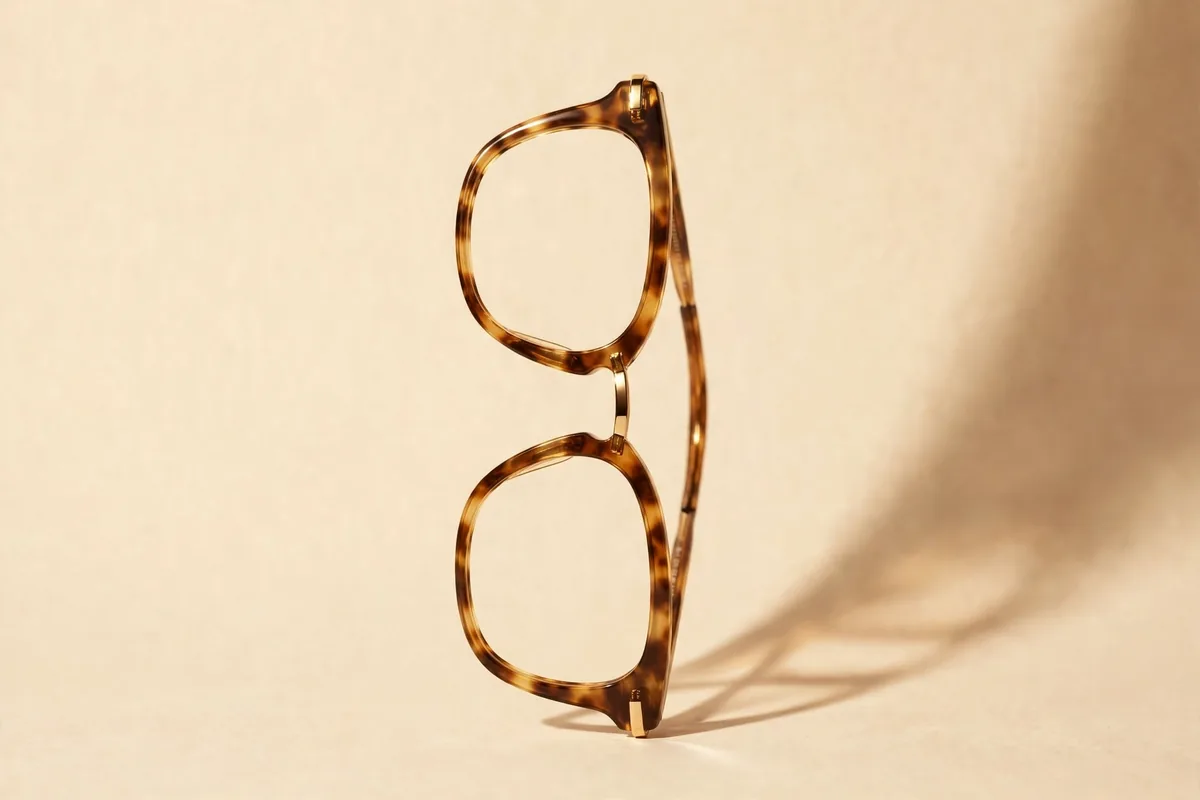
The mid-range tier — solid independent brands and smart direct-to-consumer labels — is where value peaks in eyewear. You get real materials, decent hinges, actual design intent, and fit that doesn't feel like a compromise. Not luxury craft, not budget corner-cutting. The honest middle.
Why does this tier punch so far above its weight? Competition. The value-DTC players at the bottom have compressed margins across the whole industry, which forced mid-range brands to deliver more for the money just to justify their existence. Meanwhile online buying — roughly one in seven US glasses purchases, per The Vision Council — gave these brands national reach without the rent overhead of hundreds of stores.
The result: frames with genuine design, good-enough craft, and prices that don't require a financing plan. This is also where the independent designers live — the small studios making limited runs with real personality, the brands that trend-watchers actually get excited about. Personality per dollar is highest here.
The strategy, if you want one: buy your frames in the mid-range, and put the money you saved toward better lenses. A mid-range frame with excellent lenses beats a luxury frame with basic lenses every single time. Your eyes don't care about the logo. They care about the optics.
This tier also ages better. A well-made mid-range frame can be re-lensed for years — new prescription, same beloved frame — which drops the lifetime cost dramatically. Budget frames often can't survive a re-lensing; luxury frames make it feel wasteful. The middle is built for the long game.
A mid-range frame with excellent lenses beats a luxury frame with basic lenses. Every time.
Corrected Oct 20, 2026 — see Standards & Corrections.
70 Save Here, Splurge There Single page →
Smart Buys
Save Here, Splurge There
The save-vs-splurge matrix for every dollar.
Issue #1 · Published Oct 19, 2026
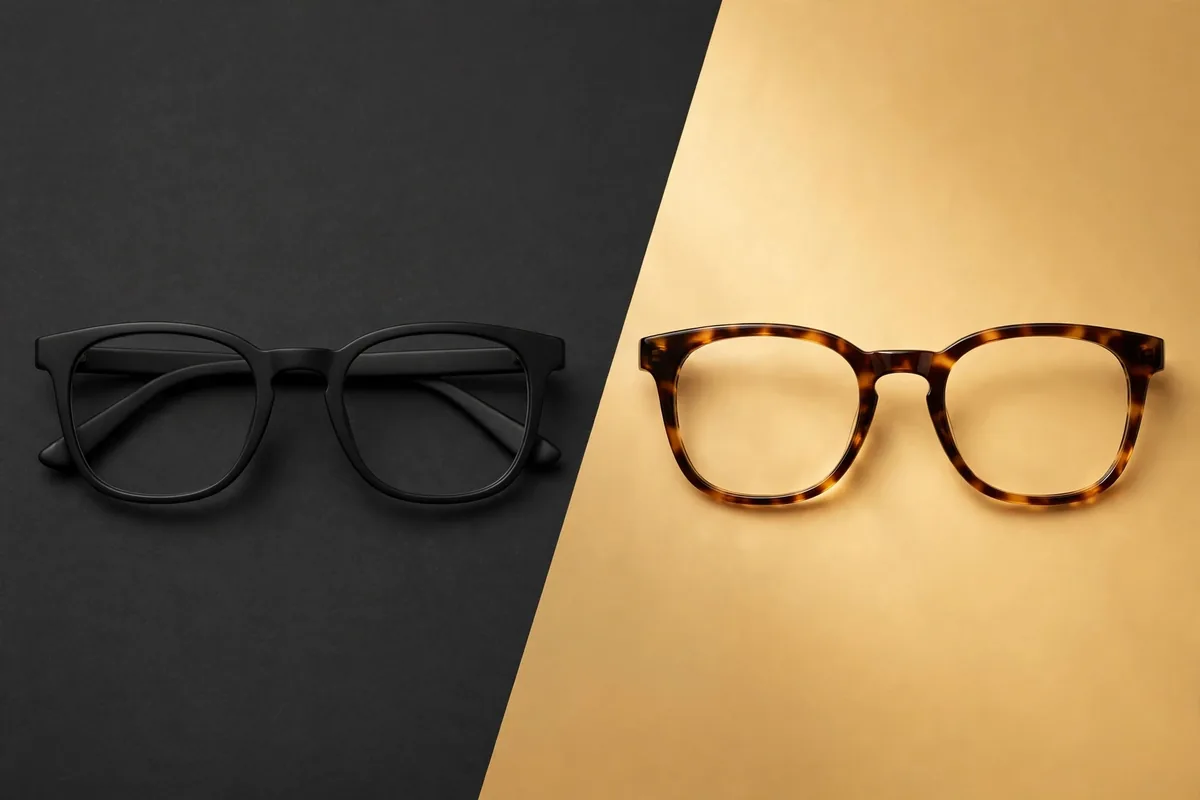
Not every dollar in an eyewear purchase works equally hard. Here's the matrix — where to save, where to splurge, and why.
Splurge: the lenses. This is non-negotiable. The lenses are the medical device; the frame is the furniture. Higher-index materials for strong prescriptions, quality anti-reflective coatings, and a proper prescription — this is where your vision lives. Cheap lenses with distortions or glare will ruin the best frame on earth. If you have budget for exactly one upgrade, it's here.
Save: the frame's brand premium. A mid-range frame holds lenses exactly as well as a luxury one. The markup buys prestige and service, not vision. If you're choosing between a fancier frame and better lenses, choose the lenses and don't think twice.
Splurge: the fitting. A professional fitting — an optician adjusting the frame to your actual skull — transforms how glasses feel and how you look in them. Many independent shops include it. It's worth real money.
Save: the second pair. Your backup or sun pair doesn't need to be precious. Budget tier is perfect here — it's insurance, not jewelry.
Splurge: prescription sunglasses. Dedicated sun lenses with real UV protection beat clip-ons and squinting, every time. If your benefits or FSA cover a second pair, this is the move.
The principle is simple: spend where it touches your eyes, save where it touches your ego.
One last matrix entry, and it's free: splurge on the exam. A precise, unhurried refraction from a good optometrist is the foundation everything else sits on. The best lenses in the world can't fix a prescription that was rushed. Twenty extra minutes in the chair pays off for a year.
Spend where it touches your eyes. Save where it touches your ego.
71 Buying Glasses Online Single page →
Read the returns policy before the product page. Always.
Smart Buys
Buying Glasses Online
The prescription glasses guide to the internet's biggest optical counter.
Issue #1 · Published Oct 19, 2026
Online is now a permanent channel in eyewear — about one in seven recent US glasses purchases happens online (The Vision Council) — and it's not hard to see why. The selection is enormous, the prices are lower without retail rent, and the technology has caught up. Virtual try-on, once a gimmick, is now genuinely useful for narrowing the field. It won't replace a mirror, but it'll keep you from ordering frames that were never going to work.
Before you buy, measure first. You'll need your prescription (with an expiration date that hasn't passed), your pupillary distance — the PD number nobody volunteers (see p72) — and your current frames' measurements if you have a pair that fits. Those little numbers stamped on the temple (lens width, bridge, temple length) are your cheat code: match them and fit is mostly solved.
The returns policy is the whole game online. Only buy from sellers with free, no-questions returns and a real remake policy. A site that won't remake a botched prescription is a site that doesn't stand behind its lab. Read the policy before the product page. Check reviews specifically for how the company handles mistakes — that's the review that matters.
One more rule: start with one pair, not three. Nail your size and your PD on a single order. Then go back for the rest. The internet rewards the patient.
And photograph everything. Your prescription, your PD, your frame measurements, the returns confirmation — keep it all in a phone album labeled "glasses." Next order takes five minutes instead of fifty. The organized buyer is the buyer who never overpays for rush shipping.
Sources: The Vision Council, The Vision Council Releases New Research Spotlighting Q1 Consumer and Market Trends; Cleveland Clinic, Pupillary Distance (PD): What It Is & How To Measure.
Corrected Oct 20, 2026 — see Standards & Corrections.
72 Know Your PD Single page →
Smart Buys
Know Your PD
The number nobody tells you, and why it matters.
Issue #1 · Published Oct 19, 2026
Pupillary distance — PD — is the distance in millimeters between your pupils. It's the single most important number in your glasses after the prescription itself, because it tells the lab where to put the optical center of each lens. Get it wrong and you're looking through the wrong part of the lens: eyestrain, headaches, blur at the edges. It's that important.
Here's the scandal: many prescribers don't volunteer it. The PD is measured during your exam, written in the file, and then — in a lot of practices — not handed to you. Why? Because a PD in your pocket is a PD you can take to an online competitor. It's the one number that makes buying glasses anywhere possible, so gatekeeping it is, functionally, customer retention.
Your eyes. Your number. Your business. Ask for your PD.
Your prescription is yours by federal law — the FTC's Eyeglass Rule requires it to be handed over after a refractive exam, no purchase required. PD is handled separately, so ask for it directly: "Please include my PD on the prescription." If they resist, measure it yourself. Digital PD measurement via a photo is convenient and fine for most single-vision orders — but a professional measurement is still the most accurate — and there are free tools and apps that walk you through it with a credit card held to your forehead as a scale reference. For progressives or strong prescriptions, get it measured professionally; the tolerance is tighter.
Write it down. Save it in your phone. It's yours. Your eyes, your number, your business.
While you're at it, learn the other numbers on the temple: lens width, bridge width, temple length. Together with PD, they're the complete fit fingerprint. Any seller — online or in-store — can work with those four numbers. Memorize them like a phone number you actually call.
Sources: Cleveland Clinic, Pupillary Distance (PD): What It Is & How To Measure.
Corrected Oct 20, 2026 — see Standards & Corrections.
73 Use Your Benefits Single page →
Smart Buys
Use Your Benefits
Vision insurance, decoded without the headache.
Issue #1 · Published Oct 19, 2026
Vision insurance is the most underused benefit in American employment. Millions of people pay for it, forget they have it, and then pay full price for glasses. Don't be those people. Here's the decode.
In-network vs. out-of-network is the whole game. In-network providers have contracted rates with your plan — you pay a copay, the plan covers the rest up to an allowance, done. Out-of-network means you pay upfront and file for reimbursement, usually at a lower rate. Neither is automatically better, but in-network is simpler, and for most people, simpler wins. Note the trend: players like Warby Parker still take under 10% of revenue from insurance-backed orders (8.3% in 2025, per its annual report) — which tells you the plans are finally meeting customers where they shop.
What plans typically cover: an annual eye exam (small copay), plus an allowance toward frames or contact lenses, and a contribution toward lenses. The frame allowance is the number to know — it resets yearly, and it doesn't roll over.
The move: schedule the exam first, get the prescription and the PD (see p72), then shop the allowance like cash. And check whether your plan covers a second pair — many do, and that's your prescription sunglasses sorted.
Watch the fine print on one thing: some plans discount heavily in-network but reimburse generously out-of-network, and the math can favor going rogue if you've found a shop you love. Run both numbers before you commit. And if your employer offers a vision plan during open enrollment and you've been skipping it — this is your sign. The premium is usually less than one pair of glasses.
Corrected Oct 20, 2026 — see Standards & Corrections.
74 Spend the FSA Single page →
FSA dollars are the perfect risk capital for eyewear. Spend them on the fun pair.
Smart Buys
Spend the FSA
Use-it-or-lose-it season is glasses season.
Issue #1 · Published Oct 19, 2026
If you have a Flexible Spending Account, December is the most expensive month to forget about it. FSA dollars are use-it-or-lose-it — whatever you don't spend by the deadline (with, sometimes, a short grace period) vanishes back to your employer. And prescription eyewear is one of the best FSA-eligible purchases there is: frames, lenses, prescription sunglasses, even contact lens solution in many plans.
The strategy is simple. October: audit. Check your FSA balance and your plan's deadline. November: decide. Second pair? Prescription sunglasses? Backup frames for the car? This is the moment for the pair you'd never buy with "real" money — the fun color, the bold shape, the experiment. FSA dollars are the perfect risk capital for eyewear. December: execute. Order early enough to beat the holiday lab rush; December is every optical lab's crunch month.
HSAs are more forgiving — the money rolls over — but the same logic applies: pre-tax dollars for something you'd buy anyway is a discount your future self will appreciate.
One caution: don't invent needs to burn the balance. But if you've been putting off prescription sunglasses or a backup pair, the deadline isn't pressure — it's permission.
Also worth knowing: many FSA administrators now accept online optical receipts without a fuss, and some plans let you buy in December for a January delivery as long as the charge hits this year. Check your plan's specifics — "incurred" versus "paid" matters. And keep every receipt. An FSA audit without documentation is a special kind of pain.
Sources: Internal Revenue Service, Topic no. 502, Medical and dental expenses.
75 The Second-pair Rule Single page →
Smart Buys
The Second-pair Rule
Two pairs beat one expensive pair. Every time.
Issue #1 · Published Oct 19, 2026
Here's a contrarian take: the smartest eyewear purchase isn't one great pair. It's two good pairs. The math is simple, the lifestyle case is overwhelming, and almost nobody does it until something breaks.
Pair one: the daily driver. This is your main frame — the one that fits perfectly, looks right, does the heavy lifting. Spend your real money here: good lenses, proper fitting, a shape you love.
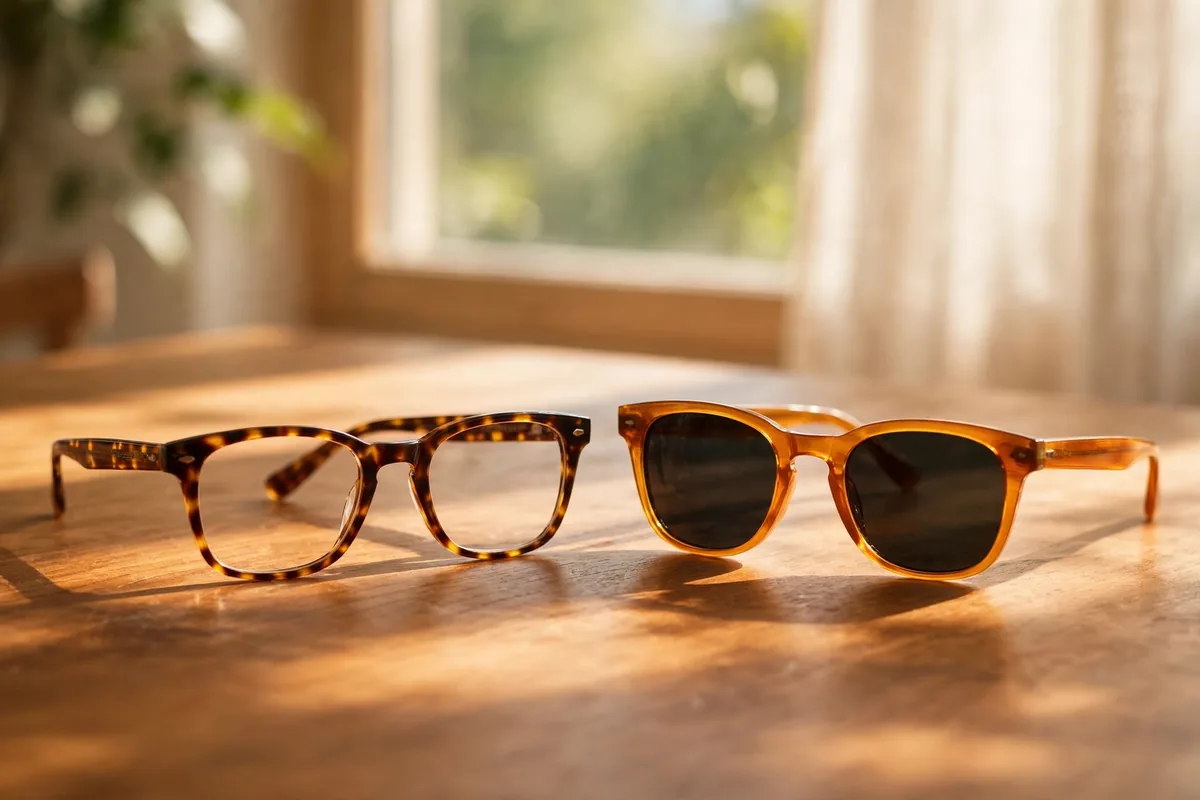
Pair two: the specialist. Prescription sunglasses, ideally. Dedicated sun lenses with full UV protection change your life in a way clip-ons never will — driving, beach days, every squinty sidewalk in July. Or make pair two the backup: the previous prescription, a budget-tier frame, something that lives in the car or the desk drawer for the day your main pair snaps a temple at the worst possible moment.
Why two beats one: redundancy is freedom. A single expensive pair makes you precious — you baby it, you panic when it slips, you're helpless when it breaks. Two pairs make you relaxed. And relaxed people look better in glasses. It's science. (It's not science. But it's true.)
The second-pair rule also unlocks experimentation. Pair two is where the bold color lives, where the weird shape gets its audition. Worst case, it's a backup. Best case, it's your new favorite.
Timing matters too. Buy pair one, live in it for a month, then buy pair two. You'll know exactly what you want differently — a touch wider, a bolder color, a lighter feel. The second pair bought with knowledge beats the second pair bought on impulse, every single time.
A single expensive pair makes you precious. Two pairs make you free.
76 Ask Before You Buy Single page →
Smart Buys
Ask Before You Buy
The questions that reveal a good shop.
Issue #1 · Published Oct 19, 2026
Price tags lie. Policies don't. Before you hand over money for glasses — anywhere, at any tier — ask these questions. The answers will tell you more about the shop than any review.
"What's the warranty?" Good shops stand behind frames for at least a year, often two, against manufacturing defects. Great shops replace a snapped temple without an interrogation. If the answer is vague, the warranty is imaginary.
"Are adjustments free, forever?" Any decent optical shop adjusts your frames for free — not just at purchase, for life. Tightening screws, re-bending temples, re-seating nose pads. This is table stakes. A shop that charges for a five-minute adjustment is telling you who they are.
"What's the remake policy?" If the prescription feels wrong, will they recheck it and remake the lenses free? The answer should be an immediate yes, with a timeframe (usually 30–60 days). Hesitation here is a red flag.
"Who does the fitting?" You want a trained optician, not a sales associate reading a script. Ask how long they've been fitting. Experience shows in the first thirty seconds of watching someone handle a frame.
"Can I take my prescription and PD with me?" The answer is always yes — it's your medical record. Watch the reaction. Enthusiasm means confidence. Reluctance means they were counting on your inertia.
Five questions, two minutes. The good shops love them. That's how you know. Bonus question for the road: "What happens if I sit on them?" The good shops laugh, then tell you about the repair. The bad ones go quiet.
77 Too Good to Be True Single page →
Smart Buys
Too Good to Be True
Red flags, counterfeit tells, and the no-return trap.
Issue #1 · Published Oct 19, 2026
The eyewear market has a scam problem, and it preys on one emotion: the thrill of the impossible deal. Here's how to spot the traps before your money disappears.
The impossible discount. Luxury frames at 80–90% off, "wholesale direct," "factory overstock" — if a deal requires you to suspend disbelief, suspend the purchase instead. Genuine designer frames have controlled distribution; they don't end up on mystery sites at fire-sale prices. What does end up there: counterfeits, gray-market frames with no warranty, or straight-up nothing after you pay.
Counterfeit tells. Misspelled brand names and blurry logos are the amateur hour stuff. The real tells are subtler: hinges that feel gritty instead of smooth, acetate with visible seams or bubbles, lenses with distortion at the edges, missing or photocopied authenticity cards, and — the big one — no serial or model numbers etched where the real ones live. If you can't verify it, don't wear it near your eyes.
The no-return trap. Any seller — online or in person — that won't take back unworn frames or remake a bad prescription is running a volume game, not a service business. Legitimate optical sellers live on remakes and returns; it's built into the model. A "final sale" on prescription eyewear is a confession.
The pressure close. "This price expires today." "Only one left at this price." Real optical shops don't do this. Walk away from anyone who does. Trust the feeling in your gut: if a listing makes you do mental gymnastics to justify it, the gymnastics are the warning.
If a deal requires you to suspend disbelief, suspend the purchase instead.
78 The Honest Price Ladder Single page →
Smart Buys
The Honest Price Ladder
Why are glasses so expensive? The never-ending story.
Issue #1 · Published Oct 19, 2026
Every eighteen months or so, like clockwork, the internet rediscovers that glasses are expensive and demands to know why. The exposés go viral. The outrage peaks. Then everyone buys glasses anyway and forgets until the next cycle. We've decided to own this story as an ongoing beat — because the question is good, even if the answers are usually lazy.
The lazy answer is "monopoly." The real answer is more interesting. Yes, the industry is concentrated: one giant — EssilorLuxottica — is the world's largest eyewear group by far, with 17,750 stores at the end of 2025, €28.5 billion in 2025 revenue, and the industry's biggest lens and frame businesses. That's real market power, and it shapes pricing. But glasses are also genuinely expensive to make well: precision optics, skilled lab work, custom manufacturing for every single order. No two prescriptions are identical. That's not a commodity business.
The honest price ladder has five rungs: materials (what it's made of), craft (how many hands touched it), design (whose idea it was), distribution (how many middlemen), and brand (the story you're buying into). Every frame's price is some mix of these. Budget tier minimizes all five. Luxury maximizes all five — including brand, which is the rung people love to hate but keep paying for.
So why are glasses so expensive? Because some of the cost is real, some of it is power, and most buyers never learn which is which. That's what this section is for. That's the ladder. Climb it with your eyes wide open.
Corrected Oct 20, 2026 — see Standards & Corrections.
79 Green Frames? Single page →
Smart Buys
Green Frames?
Sustainable eyewear, and how to audit the claims.
Issue #1 · Published Oct 19, 2026
Sustainability is eyewear's favorite marketing word right now, and its least verified one. Plant-based materials are rising — Etnia Barcelona builds frames from natural acetate made of cotton and wood, and Lacoste has a plant-based line in a castor-bean resin that is 90% renewable carbon. Recycled programs and take-back schemes are multiplying. The demand is real, and so is the marketing built on it. The claims, though? Audit them.
Start with the material. Bio-acetate sounds green, but ask what's actually bio-based and what isn't — some "bio" acetates are only partly plant-derived, with the rest conventional plastic. Recycled content is better when the brand names the source (ocean plastic, factory offcuts) and the percentage. Vague "eco" language with no numbers is a smell test failure.
Then the lifecycle. A frame's greenest feature is durability — a pair that lasts ten years beats three "sustainable" pairs that last two. Ask about repairability: can the hinges be serviced, the lenses replaced, the frame re-polished? A take-back scheme is nice; a repair program is better.
Finally, the certification. Third-party eco-certifications mean something because somebody checked. Self-declared "conscious" collections mean the marketing department checked. There's a difference.
The honest position: sustainable eyewear is real and improving, but the marketing runs ahead of the verification. Buy the durable frame, keep it a decade, and let the green claims earn your trust instead of buying it.
And the most sustainable frame of all? The one you already own. Before buying "green," ask whether your current pair can be re-lensed, repaired, or re-polished. The greenest purchase is usually the one you don't make — and the second greenest is the one you keep for a decade.
Sources: Etnia Barcelona, MANACOR; Marchon Eyewear, Lacoste Introduces L1212 The New Plant Based Look.
Corrected Oct 20, 2026 — see Standards & Corrections.
80 The Club's Verdicts Single page →
Smart Buys
The Club's Verdicts
The Smart Buys section, in rapid fire.
Issue #1 · Published Oct 19, 2026
You've read the section. Here's the whole thing on one page, no hedging.
The $40 vs $400 question: Neither is a scam, neither is a miracle. Budget buys function; luxury buys craft, service, and brand. The ripoff zone is the uninformed middle.
Own your vision — and your wallet.
The sweet spot: Mid-range frames with excellent lenses. Every time. Your eyes can't read logos.
Where the money goes: Splurge on lenses and fitting. Save on brand premium and backup pairs. Spend where it touches your eyes; save where it touches your ego.
Buying online: Measure first, read the returns policy before the product page, start with one pair. Virtual try-on narrows the field; it doesn't replace the mirror.
Your PD: Ask for it. It's your number. Digital photo measurement is fine for most single-vision orders; a professional measurement is still the most accurate.
Benefits: Check your vision plan before you shop — in-network is simplest, the frame allowance resets yearly, and many plans cover a second pair.
The FSA play: Audit in October, decide in November, order in December. Spend the use-it-or-lose-it dollars on the fun pair.
The second-pair rule: Two good pairs beat one expensive pair. Prescription sunglasses as pair two will change your life.
Before you buy: Warranty, free adjustments forever, remake policy, trained optician, take your PD with you. Five questions, two minutes.
Red flags: Impossible discounts, gritty hinges, no-return policies, pressure closes. Walk away.
The price ladder: Materials, craft, design, distribution, brand. Know which rung you're paying for.
Green frames: Buy durable, keep it a decade, audit every eco claim. Certifications over adjectives.
That's Smart Buys. Own your vision — and your wallet.
Corrected Oct 20, 2026 — see Standards & Corrections.